

Micro Four Thirds at the Edge of Cinema
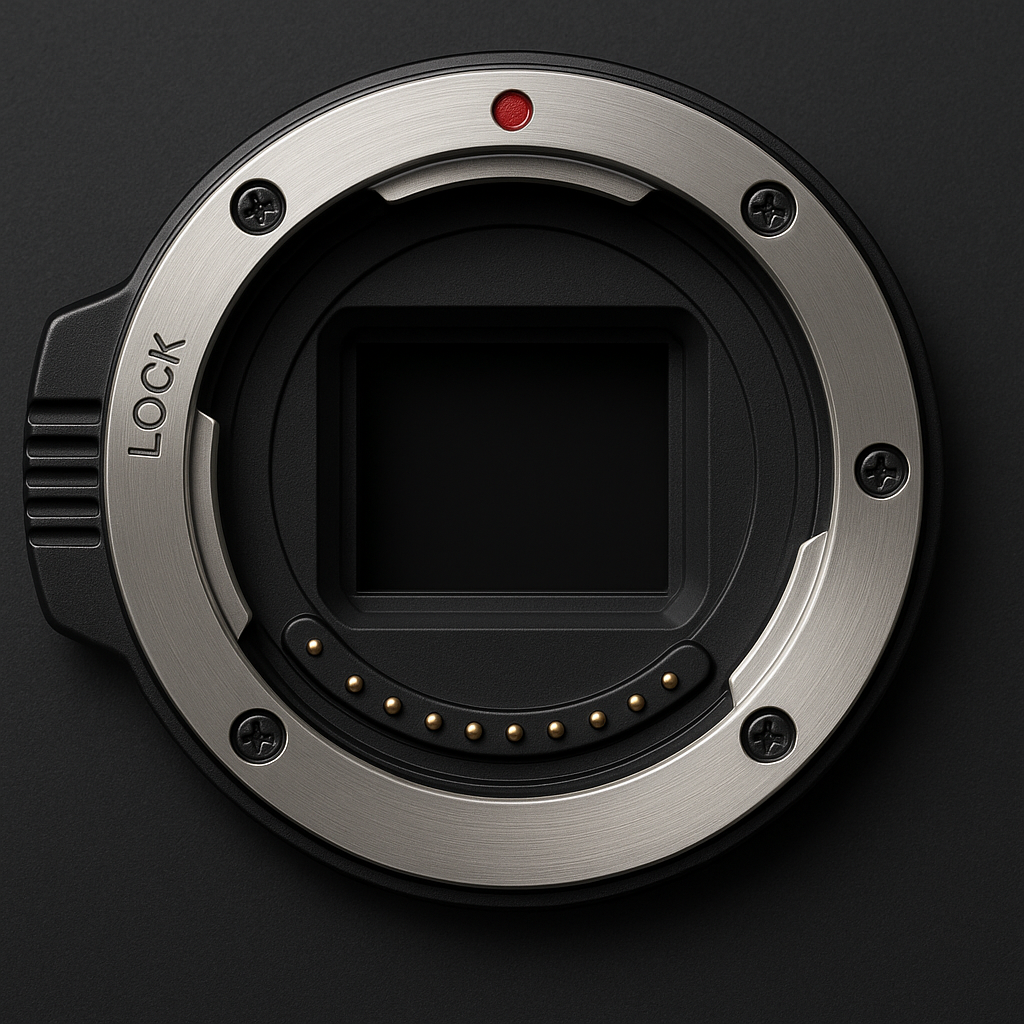
I used several modern 4K and 8K full frame cameras, but recently I shot a job using a lighter GH7 in the Micro Four Thirds format. When I brought the footage into post, I was genuinely surprised by how rich and detailed it looked compared to my full frame gear. The depth of field was different, as expected, but the color accuracy and overall image integrity stood out immediately. It was strong enough to make me question some long held assumptions about sensor size. That experience led me to think less about Micro Four Thirds as a compromised alternative, and more about its potential as a foundation for industrial style cinema production. Not as a format chasing shallow depth of field, but as one built around control, consistency, and reliability on demanding shoots. For years, Micro Four Thirds has been described as a format that peaked early. Compact, fast, efficient, yet eventually overshadowed as full frame and large format absorbed the industry’s attention. That framing misses something important. Micro Four Thirds was never fully explored as a sensor architecture. It was only ever discussed as a product category.
Sharp an Experiment That Arrived Too Early
That question briefly surfaced in a very public way when Sharp unveiled an 8K Micro Four Thirds camera prototype several years ago. At the time, the announcement felt almost out of place. Sharp was not known as a camera company, and the project was positioned closer to the prosumer market than to high end cinema. Still, the implications were hard to ignore. An 8K sensor inside the Micro Four Thirds image circle challenged the assumption that the format had already reached its limits. The camera never materialized as a finished product, and the reasons were largely practical rather than conceptual.
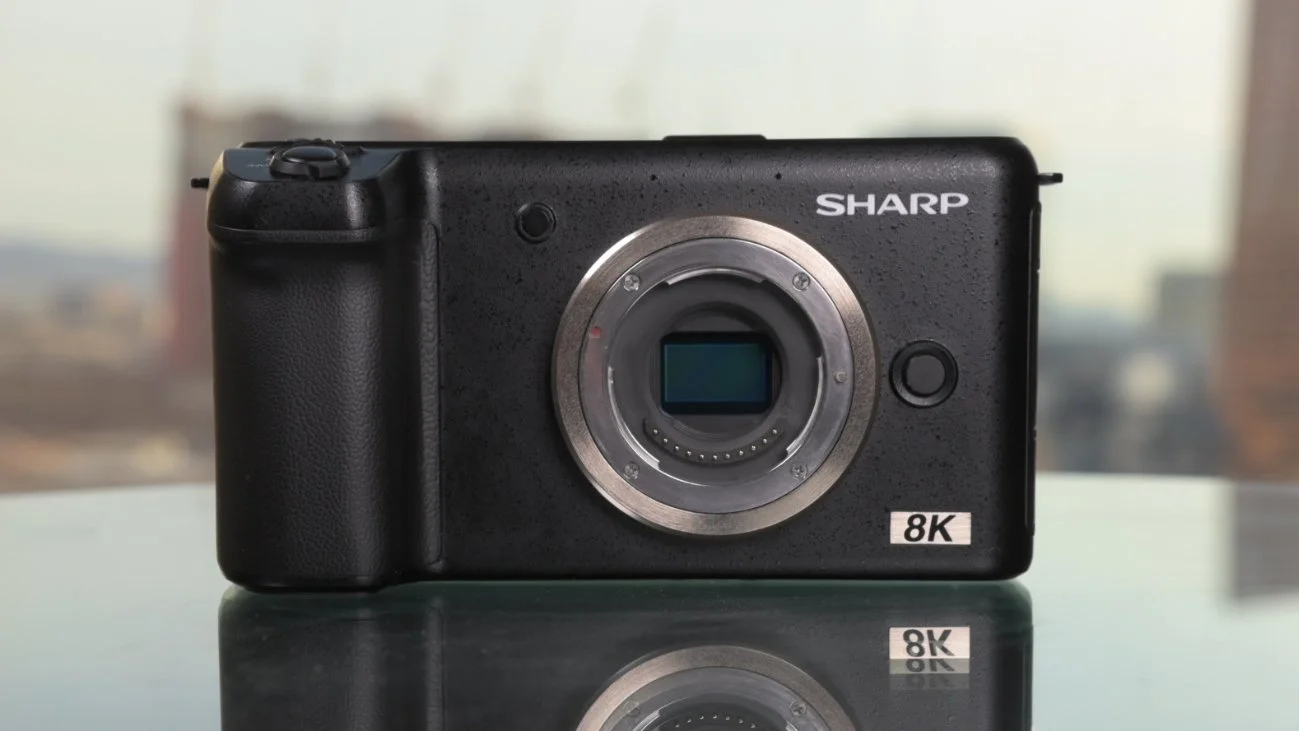
Sharp 8K MFT Camera
The technology arrived early, the workflow expectations were immature, and the supporting ecosystem never caught up. But in hindsight, Sharp’s experiment was not a misstep. It was an early signal that resolution density and sensor design, not just sensor size, would eventually define how far the format could be pushed, and that the next real leap would likely come from how light is interpreted rather than how much of it is collected.
The Other Choices
Sharp’s prototype did not initiate these ideas so much as momentarily expose them. By the time Sharp surfaced with an 8K Micro Four Thirds concept, other manufacturers were already exploring different aspects of what the format could become, often quietly and without marketing spectacle. Panasonic had been refining MFT as a professional tool for years, prioritizing color science, internal codecs, timecode, and production reliability over headline grabbing specs. OM System pushed the sensor in a different direction, focusing on stacked designs, readout speed, and computational precision, treating responsiveness as a core image quality parameter. Z CAM approached Micro Four Thirds as modular infrastructure, building compact cinema cameras that emphasized RAW workflows, physical integration, and flexibility over form factor conventions. JVC, earlier still, tested whether the MFT mount itself could survive industrial and broadcast use, pairing it with long form ergonomics and variable scan mapping to prioritize lens adaptability and operational stability. More recently, companies like Bosma have treated MFT as a cinema platform in its own right, releasing purpose built cameras that lean into the format’s compactness and system efficiency rather than apologizing for its size. None of these paths fully resolved the central limitation on their own. But together, they reveal a format that never stopped evolving. It simply lacked a sensor architecture designed to unify speed, stability, and dynamic range into a single cinema first foundation.
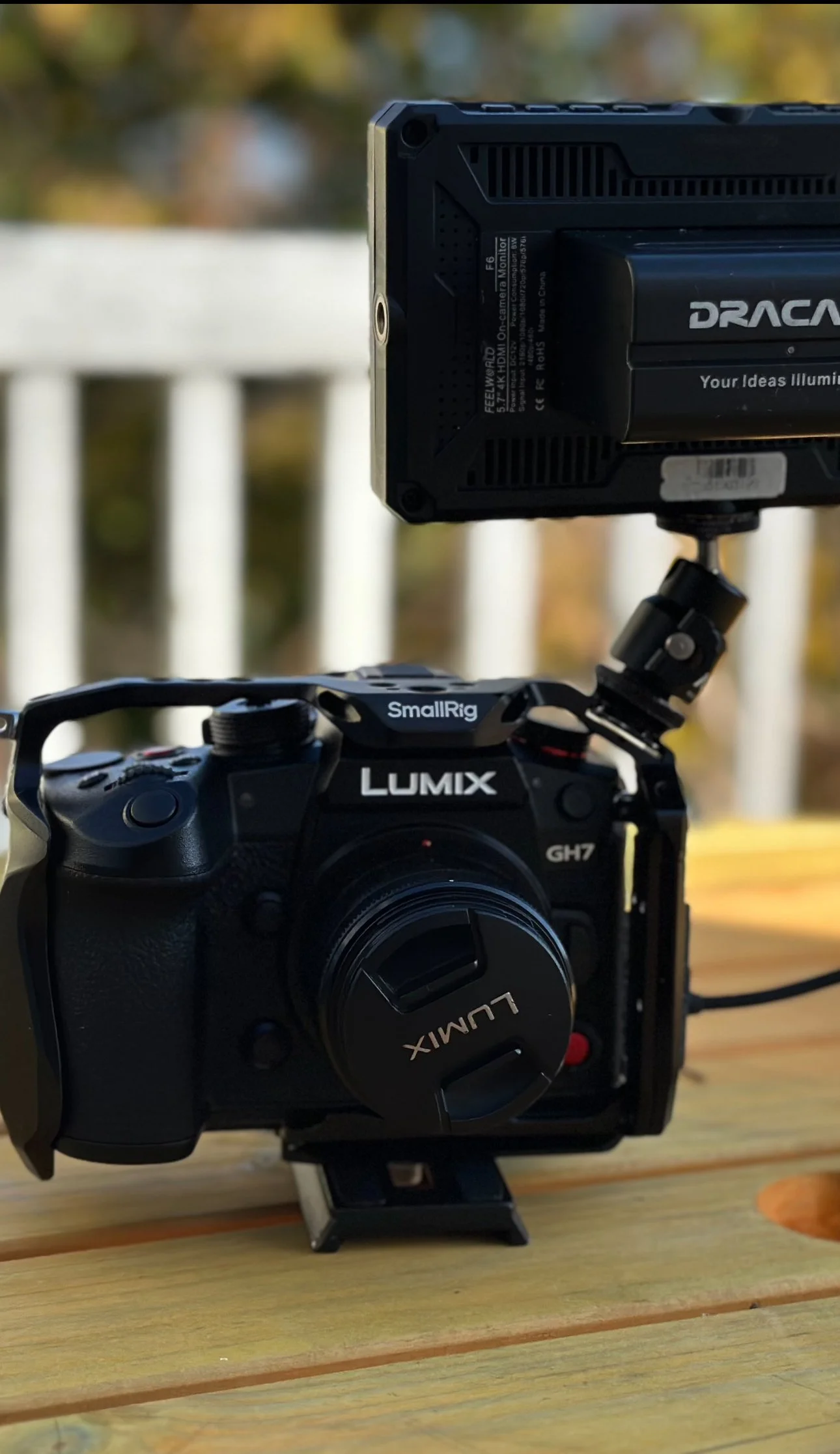
Panasonic’s LUMIX GH7
The End of The Road
Taken together, these efforts reveal a format that has been refined from every angle except the one that matters most. Micro Four Thirds has been optimized for speed, portability, and versatility, but rarely for cinema behavior at the sensor level. Resolution has climbed. Readout has improved. Workflows have stabilized. Yet the same compromises persist. Dynamic range is extended, not rethought. Highlights are managed, not fundamentally protected. Motion artifacts are reduced, not eliminated. This is not a question of market relevance or sensor size. It is a design ceiling. Micro Four Thirds does not lag behind modern cinema cameras. It simply reaches the limits of what its current sensor architectures are capable of delivering.
The End of Refinement
If Micro Four Thirds is to move beyond this point, the response cannot come from another incremental sensor refresh or a new recording format layered on top of the same foundations. It has to come from the sensor itself. Specifically, from how a single exposure is read and preserved before any color science, compression, or workflow decisions are made. The question this raises is not academic. It is practical, and it is directed at manufacturers who already possess the engineering capability to answer it. What would happen if Micro Four Thirds stopped trying to stretch dynamic range through modes and profiles, and instead captured it natively through parallel readouts of the same light? What would change if highlights and shadows were interpreted simultaneously, not sequentially, and merged before compromise ever enters the pipeline? This is the space where Parallel HDR becomes less of a theory and more of a design obligation. Not because the format demands novelty, but because the tools built around it have already proven everything else they can.
At this stage, choosing not to rethink the sensor is no longer a technical limitation. It is a design decision. One that favors familiarity over control, iteration over intention. The tools exist. Stacked sensors are mature. Parallel readout paths are well understood. High bandwidth pipelines are already standard. What has been missing is not feasibility, but willingness. A willingness to design a Micro Four Thirds sensor as a cinema instrument first, rather than adapting consumer architectures and hoping color science and profiles can compensate later.
Reading Light More Than Once
While many modern cameras already use dual gain circuits to extend dynamic range, those systems still require the sensor to choose a single interpretation of the scene per frame. Parallel HDR proposes something different: preserving multiple interpretations at once, before any exposure decision is finalized.
Most digital cameras are designed around a single exposure interpretation model. Light enters the lens, hits the sensor, and the sensor makes a single decision about how bright that light is. If the scene is too bright, highlights clip. If it is too dark, shadows fall apart. Everything that follows, color science, profiles, HDR modes, grading, is an attempt to recover from that first, irreversible choice.
Parallel HDR starts by questioning that assumption.
Imagine a room with a single window. One person is asked to describe everything inside the room, from the brightest highlights outside the window to the darkest corners in the back. No matter how skilled they are, they will miss something. They either focus on the bright areas and lose the shadows, or focus on the shadows and let the window blow out.
Now imagine two people standing in that same room at the same time. One is instructed to pay attention only to the brightest areas. The other is told to focus only on the darkest details. Neither sees more light than before. The room has not changed. What has changed is how the information is gathered.
That is the core idea behind Parallel HDR.
Instead of forcing the sensor to make one exposure decision, the sensor reads the same light through multiple paths at the same time. One path is tuned to protect highlights. Another is tuned to pull detail from shadows. Both readings come from the same moment, the same light, the same exposure. Nothing is stacked over time. Nothing is reconstructed later.
This does not create more light. It does not bypass physics. It simply avoids discarding information too early.
For filmmakers, the result is not an exaggerated HDR look. It is a calmer image. Highlights roll off more predictably. Shadows retain color instead of breaking into noise. Exposure becomes more forgiving, not because the camera is guessing better, but because it is preserving more of what was already present.
Seen through the window analogy, nothing about the room has changed. The window is no brighter. The corners are no darker. What changes is that the description of the room no longer depends on a single point of view. By allowing multiple readings of the same moment, more of the scene makes it through intact, before anything has to be simplified or thrown away.
A Necessary Clarification
Dual gain is not Parallel HDR. Dual gain selects the best interpretation of a scene. Parallel HDR preserves multiple interpretations before any interpretation is finalized.
Why Micro Four Thirds Is the Right Format to Attempt This First, Not Last
At first glance, proposing a new sensor architecture for a smaller format can seem counterintuitive. If the goal is better dynamic range and more robust image capture, why not begin with the largest sensor available. That assumption treats scale as the primary advantage. In practice, sensor architecture tends to evolve in the opposite direction.
New imaging ideas almost always prove themselves at smaller scales before moving upward. Smaller sensors are easier to manufacture, easier to cool, and easier to iterate on. Yields are higher. Signal paths are shorter. Readout speeds are faster. These are not secondary concerns when the goal is to preserve more information from a single exposure rather than simply collect more light.
Micro Four Thirds sits at a practical intersection. It is large enough to behave like a cinema sensor, yet small enough to support architectural experimentation that becomes risky or prohibitively expensive at larger sizes. Adding parallel readout paths, additional analog circuitry, or stacked logic layers scales more gracefully on a smaller die. What feels ambitious on full frame becomes feasible on Micro Four Thirds.
There is also a system level advantage. Micro Four Thirds lenses are more telecentric (designed to keep the same magnification no matter the object's distance or position in the field of view) by design, delivering light to the sensor at more consistent angles across the frame. That uniformity matters when a sensor is designed to preserve highlights and shadows simultaneously. Predictable illumination and stable edge behavior are not conveniences. They are requirements.
Equally important, Micro Four Thirds has no single look. It has been used across broadcast, documentary, narrative, and experimental work without being locked to a specific aesthetic. That flexibility creates space to introduce a new sensor philosophy without immediately being judged against legacy assumptions.
Starting here is not a compromise. It is a strategy.
If Parallel HDR can deliver smoother highlights, cleaner shadows, and more predictable motion at the Micro Four Thirds scale, it does not remain confined to it. It establishes a principle. Once that principle is proven, it can be scaled upward deliberately, rather than optimistically.
In that sense, Micro Four Thirds is not the fallback format for this idea. It is the proving ground.
Now Hear Me Out
The point of rethinking Micro Four Thirds at the sensor level is not to keep it isolated as a niche experiment, but to ask what happens when that discipline is taken seriously by a manufacturer whose entire identity is built on image behavior rather than market trends. If a company like ARRI (this is how they could introduce a lower priced option, while maintaining high quality) were to approach this format, the hardest part would not be the sensor. It would be the ecosystem around it. Mounts are politics as much as they are mechanics. A universal electronic mount sounds progressive, but in practice it introduces licensing conflicts, inconsistent lens behavior, and long term instability. ARRI has never chased openness for its own sake. It has chased control. In that context, sticking with an established standard makes more sense. A newly designed locking Micro Four Thirds mount would preserve compact optics, telecentric behavior, and system efficiency. A PL mount would immediately place the camera inside a trusted professional ecosystem, prioritizing reliability over flexibility. Either choice would be deliberate. What matters is not universality, but predictability. That has always been ARRI’s currency. I’ll expand further on this design logic and the mount politics later in another post, but the idea is simple. Control scales better than flexibility.
What ultimately justifies such a camera is not how it competes with full frame or large format on specifications, but how the image feels to both the audience and the cinematographer. A Micro Four Thirds cinema sensor, especially one built around parallel HDR, produces a distinctly different perceptual image. Depth of field feels deeper and more continuous, holding cohesiveness within the frame instead of isolating subjects by default. Color feels denser and more layered, with hues sitting closer together rather than spreading across wide gradients. Contrast feels held rather than stretched. Highlights transition smoothly instead of flaring outward. The image feels cohesive, disciplined, and intentional. Larger formats excel at scale, separation, and visual presence. They feel expansive and airy. Micro Four Thirds, by contrast, feels grounded and concentrated. For the audience, that reads as believability and intimacy. For the cinematographer, it reads as control, consistency, and an image that survives motion, mixed lighting, and imperfect conditions without constantly calling attention to itself. This is not a compromised look. It is a different visual language. And when designed deliberately, it is one that aligns closely with why many filmmakers still romanticize film in the first place.
Not the Conclusion
What this exploration ultimately points to is not a rejection of physics, but a reordering of priorities. A Micro Four Thirds sensor designed around Parallel HDR would not magically surpass large formats in raw photon capture. On its own, such a sensor could realistically deliver a usable dynamic range in the range of fourteen to fifteen stops, depending on scene contrast and exposure discipline. That already places it squarely in serious cinema territory when those stops are clean, stable, and predictable. Where the architecture becomes transformative is when computational computing is treated not as a crutch, but as an assistant. With single-exposure parallel readouts preserved at capture, light computational weighting, temporal noise coherence, and highlight rolloff modeling could push usable dynamic range closer to sixteen or even seventeen stops without resorting to multi frame HDR or introducing motion artifacts. The key distinction is that computation would be enhancing preserved information, not fabricating missing data. The image remains continuous, stable, and gradable. The sensor does the heavy lifting. Computation simply refines what survived the first read.
At that point, the question is no longer whether Micro Four Thirds can be taken seriously as a cinema format. It already has been, in fragments. The question is who is willing to unify those fragments into a deliberate system. Panasonic has the sensor expertise, the video first culture, and the MFT legacy to attempt this without abandoning its identity. ARRI has the image discipline, trust, and industrial rigor to elevate it into a new class entirely. A premium cinema camera built around a disciplined MFT sensor, Parallel HDR capture, and a controlled mount strategy would not compete with large format by imitation. It would differentiate by intent. It would offer smoother highlights, deeper yet stable depth of field, dense and cohesive color, and an image that holds together under real-world conditions. That is not a niche request. It is a design opportunity. And at this stage, choosing not to explore it is no longer a technical limitation. It is a decision.